


ROBIN HOOD AND LITTLE JOHN WALKIN' THROUGH THE FOREST:
CHASING THE LEGEND OF DISNEY'S ROBIN HOOD
Last updated: January 10, 2026
Robin Hood has been stealing hearts—and ill-gotten gold—for centuries. Long before Disney turned him into a clever, sword-swinging fox, he was already one of England’s most beloved legends, passed down through ballads, books, and bedtime stories.
Disney first brought Robin Hood to life in the 1950s with a live-action adventure, full of castles, jousts, and heroic daring. But in 1973, Disney did something different. They reimagined the legend as a warm, musical story about friendship, fairness, and standing up for the little guy—a Sherwood Forest that felt less like a history lesson and more like a storybook you could step right into.
So I went to England to follow Robin’s trail for myself—winding my way through Nottinghamshire to discover where history meets legend.
getting there
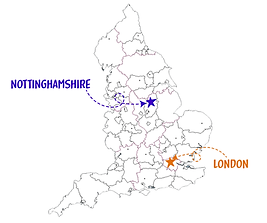
Our journey through Robin Hood’s world begins in Nottinghamshire, a county in the Midlands of England. While the story will eventually lead us a bit further north, our real-world starting point is the lively city of Nottingham—the perfect base for exploring everything that follows.
Getting there from London is wonderfully easy. Trains run regularly from London St Pancras to Nottingham, whisking you north through the English countryside in under two hours. It’s one of those trips where you can watch the scenery shift from city streets to rolling fields and feel, little by little, like you’re heading into a story.
But while it is a snap to get there, Nottingham does sit a fair distance north of London (approximately 2 hours or 130 miles), which means this isn’t something you squeeze into a spare afternoon. This is a proper adventure—a side quest. One that rewards you with medieval towns, ancient trees, and the kind of landscapes that have been inspiring legends for centuries.
ye olde trip to jerusalem
At the start of my journey, I wanted to get a feel for how Nottingham would have been during the time of Robin Hood. And I found it tucked into the sandstone cliffs beneath Nottingham Castle--Ye Olde Trip to Jerusalem, a pub that has been welcoming travelers since at least the late 1100s—right in the heart of the era where the Robin Hood legends were born.
Stepping inside felt a little like walking into a storybook. The floors dip and curve. The stone walls seem to lean in close. Some rooms are carved straight into the rock itself, as if the building simply grew out of the hillside. It’s the kind of place that makes you half-expect a band of Merry Men to slide into the next booth.

This is the Nottingham Disney was chasing in Robin Hood—not grand or polished, but warm, crooked, and full of life. In the film, the town feels cozy and communal, a place where everyone knows each other and every doorway might lead to a song or a scheme. The building that houses Ye Olde Trip to Jerusalem carries that same spirit, the sense that history here was made by ordinary people living their everyday lives.
nottingham castle

Next, I headed next door to Nottingham Castle. And if you’ve watched Disney’s Robin Hood and then stood in front of Nottingham Castle, you might pause and think… wait, is this the right place?
The castle you see today doesn’t look much like the fortress in the film. That’s because the medieval stronghold that once crowned this hill was torn down and rebuilt many times. In the 1800s, it was transformed into the elegant ducal mansion that stands here now—graceful, symmetrical, and very much of a later era.
But Disney’s artists knew this wasn’t the castle they were looking for.
When they designed their own Nottingham Castle, they turned to older illustrations and descriptions of the original Norman fortress that once ruled Nottingham from this very spot—a tall, imposing stronghold meant to be seen from every corner of the town below. The hill does the storytelling all on its own. Looking out over Nottingham, it’s easy to understand why this was the perfect place for the Sheriff of Nottingham (a supporter of Prince John)… and for a legend about an outlaw who dared to challenge him.
Inside the castle today, the exhibits bring Robin Hood’s world back into focus, exploring both the real history of Nottingham and the stories that grew from it. And for me, this stop came with a small, personal bit of magic: my dad told me that when he was three years old, he was given a Robin Hood hat—a memory he’s carried with him ever since. So of course, I found him a more “authentic” version in the castle gift shop, straight from Robin’s own city. It felt like a little piece of the legend coming full circle.
st. mary's church
From Nottingham, it’s very simple to get to the village of Edwinstowe via public transport—a gentle step away from the busy city and into a quieter, greener chapter of the Robin Hood story.
Option 1:
Take the train from Nottingham Station to Mansfield and then transfer to the bus at Mansfield Bus Station to Edwinstowe (Royal Oak Court Stop).
Option 2:
Take the Sherwood Arrow bus from Victoria Bus Station in Nottingham to Edwinstowe (High Street Stop).

At the center of the village stands St. Mary’s Church, a beautiful 12th-century building long linked to the legend. Local tradition says this is where the real Robin Hood married Maid Marian, and whether or not that’s true, it feels exactly like the kind of place Disney would choose for a moment like that.
The rounded stone arches, the peaceful interior, and the welcoming warmth of the building instantly brought to mind the church in Robin Hood where Friar Tuck serves his congregation. Disney’s version may be simplified and animated, but the heart of it—the sense of comfort, community, and kindness—feels very real here.
Outside, the churchyard adds another layer of charm. As you walk among the gravestones, you’ll spot Robin Hood–themed cutouts tucked throughout the grounds, little reminders that this village doesn’t just remember the legend—it lives with it. You can wander, pause, and let the stories settle around you, just as they have for centuries.

sherwood forest
One of the loveliest surprises of Edwinstowe is how close it is to Sherwood Forest. From the church, it’s only a short walk before the village gently fades into trees, and suddenly you’re stepping into the world of Robin Hood himself.
Sherwood Forest offers a variety of walking trails, from easy, flat paths perfect for a leisurely stroll to longer loops that wind deeper into the woods. Each one feels a little different—some open and airy, others quiet and shaded. There's something for everyone.
And then there’s the Major Oak. According to legend, this enormous, ancient tree was where Robin Hood once hid—or even lived—using its hollow trunk as shelter. Standing in front of it, it’s hard not to believe. The tree feels old in the best possible way, like it has been keeping secrets for hundreds of years.
Disney made Sherwood Forest the heart of Robin Hood. More than any castle or village street, this is where the movie truly lives—where the Merry Men sang, where Robin and Marian found love, and where the story took root (pun intended). Standing in front of the Major Oak and wandering these trails, it was easy to see why. Even today, Sherwood Forest feels peaceful and welcoming. Despite its fame, the forest never felt crowded or rushed. It’s a place meant for wandering, wondering, and letting stories linger.
Disney’s Robin Hood doesn’t recreate medieval England as it was—it captures it as legend remembers it. Visiting Nottinghamshire made it clear how much the film’s warmth, humor, and visual style are grounded in real places.
These locations aren’t replicas of the movie. They’re its foundation. Walking through them felt less like sightseeing and more like stepping into the quiet spaces between history and story—where Disney found its inspiration, and where the legend still lives. And that, honestly, felt like magic enough.
If you're visiting England and want to step out of the hustle and bustle of London, please check out these additional stories below.

If you could join the Merry Men for a day, where would you want to go first?